
Overview
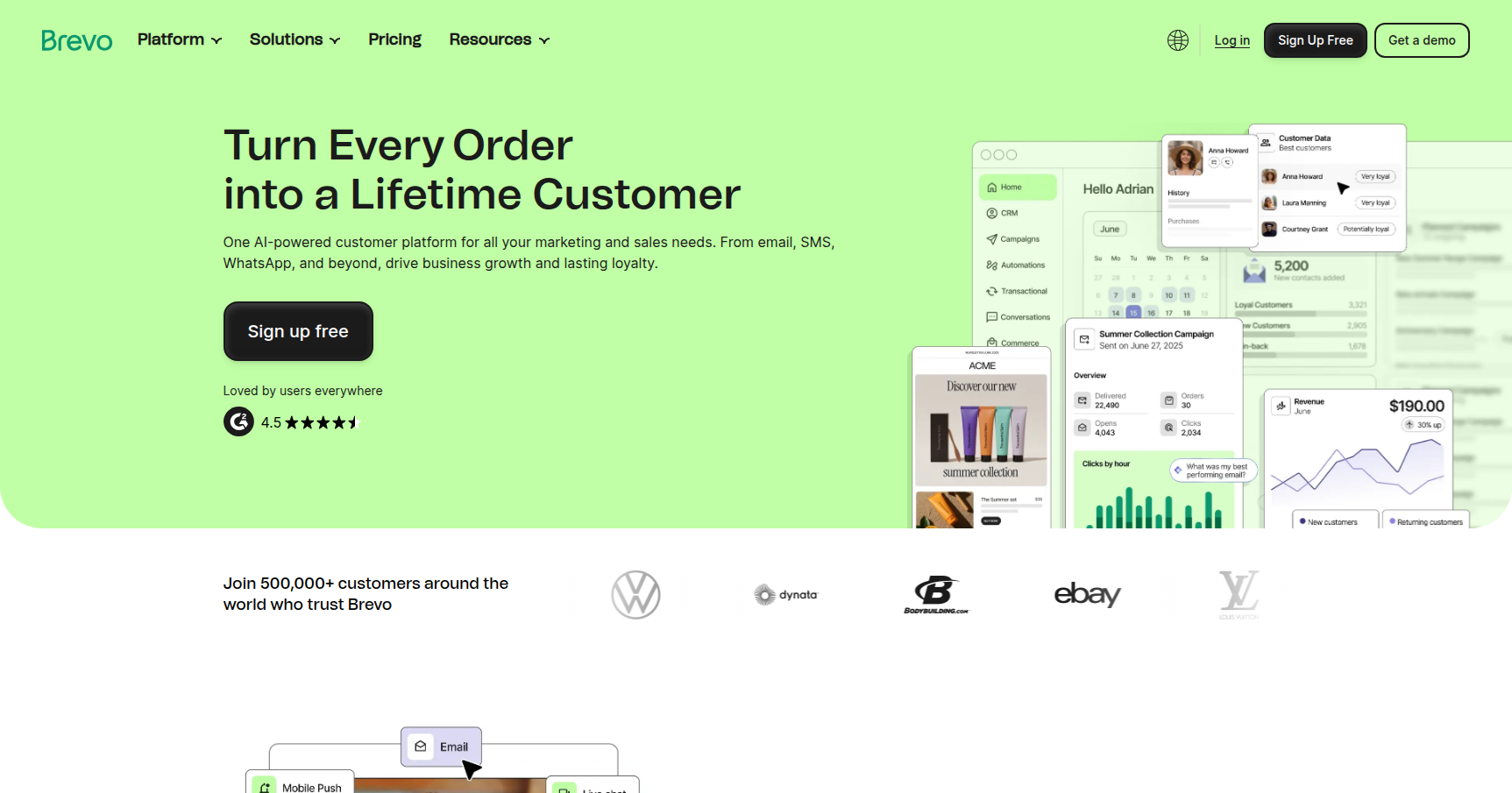
If you have been around the email marketing block, you likely know Brevo by its former name, Sendinblue. They rebranded to signal a shift from a pure email utility to what they call a "Relationship Marketing" platform.
Here is the reality behind the marketing speak: Brevo is trying to bridge the massive gap between simple newsletter tools like Mailchimp and heavy-duty, expensive CRMs like HubSpot or Salesforce.
It allows you to manage the entire customer journey in one dashboard. We are talking about marketing emails, transactional API calls, SMS, WhatsApp, and even live chat. The biggest differentiator here is their philosophy on data. Unlike almost every competitor that charges you based on how many contacts you store, Brevo charges based on how many emails you send. If you have a massive database of 50,000 users but only email them once a month, Brevo is likely the most cost-effective tool on the market.
Key Features
1. The Volume-Based Pricing Model
This is the headline feature. Most email platforms tax you for success; as your list grows, your bill doubles, even if half those subscribers are inactive. Brevo allows you to store unlimited contacts for free across all plans. You only pay for the messages you actually deploy. This makes it incredibly attractive for businesses with large, low-engagement lists or seasonal senders.
2. True Multichannel Campaigns
Brevo doesn't force you to use third-party plugins for SMS or chat. It is all native. You can build an automation workflow that sends an email on day one, waits two days, and then sends a WhatsApp message or SMS if the email wasn't opened. With the 2024 updates, they have leaned heavily into WhatsApp marketing, allowing you to manage those campaigns right next to your newsletters.
3. Transactional Email Powerhouse
Before they were a full marketing suite, they were an SMTP provider. They haven't lost that DNA. Developers often pick Brevo solely for its API reliability to send password resets, order confirmations, and shipping alerts. Their deliverability on these critical emails is consistently high, and separating your "marketing" reputation from your "transactional" reputation is easy here.
4. Built-in CRM and Sales Tools
It is not Salesforce, but it is surprisingly capable for SMBs. The platform includes a Sales CRM where you can track deal stages and pipelines. They also recently added a "Meetings" feature (similar to Calendly) where clients can book time slots that sync directly to the CRM. If you are a small agency or service business, this consolidation saves you from paying for three different SaaS subscriptions.
Pricing
Brevo’s pricing is tiered by monthly email volume. All plans include unlimited contact storage.
-
Free Plan ($0/mo):
- Includes 300 emails per day.
- Access to the drag-and-drop editor and transactional email API.
- Note: The 300/day limit is strict. It is good for testing or very small lists, but not for blasts.
-
Starter (Starts at ~$9/mo):
- Removes the daily sending limit.
- Includes basic reporting and email support.
- Price scales based on volume (e.g., 5,000 emails/mo is the entry point).
-
Business (Starts at ~$18/mo):
- The Sweet Spot: This tier unlocks Marketing Automation, A/B testing, and advanced statistics.
- Includes "Aura" AI for send-time optimization.
- Removes the "Sent by Brevo" logo from your footer.
-
Brevo Plus/Enterprise (Starts at ~$499/mo):
- Designed for high-volume senders (150k+ emails).
- Adds enterprise-grade security, sub-accounts, and priority phone support.
-
Add-ons:
- Dedicated IP: ~$251/year. Essential if you are sending high volumes and want to isolate your sender reputation.
- SMS/WhatsApp: Sold as pre-paid credits (Pay As You Go).
Pros & Cons
The Good
- Cost Structure: For businesses with large lists but moderate sending frequency, the savings compared to Mailchimp or ConvertKit are significant.
- Developer Friendly: The API documentation is clean, and the SMTP reliability is top-tier. It works well for "headless" setups.
- The "All-in-One" factor: Having Live Chat, Email, and SMS in a single tab reduces context switching for support and sales teams.
- Ease of Use: The drag-and-drop builder is intuitive. The "no-code" automation workflow builder is visual and easy to grasp for beginners.
The Bad
- Aggressive Vetting: To protect their deliverability, Brevo has a very sensitive automated account vetting process. New users often report getting their campaigns "paused" for manual review immediately after signing up. It usually resolves quickly, but it is a friction point.
- Reporting Limits: On the Starter plan, the analytics are thin. If you want heat maps, geo-data, or device data, you have to upgrade to the Business plan.
- Support Speed: While the help is generally competent, users on the Free and Starter tiers often face slower response times compared to the priority support given to Enterprise clients.
- Landing Pages: The landing page builder exists, but it feels a bit clunky compared to dedicated tools like Unbounce. It gets the job done for simple lead magnets, but don't expect design miracles.
Verdict
Brevo is the pragmatic choice for SMBs, e-commerce stores, and startups that need to keep costs low while maintaining a large database of contacts. If you have 20,000 contacts but only email them twice a month, using a subscriber-based pricing tool (like Mailchimp or ActiveCampaign) is burning money. Brevo solves that specific financial pain point perfectly.
It is also an excellent choice for technical teams who need a reliable transactional email service that can double as a marketing platform for the growth team.
However, if you are a heavy enterprise power-user who needs granular, pixel-perfect reporting on the cheapest plan, or if you need immediate 24/7 phone support without paying a premium, you might find the entry-level tiers frustrating.