

Overview
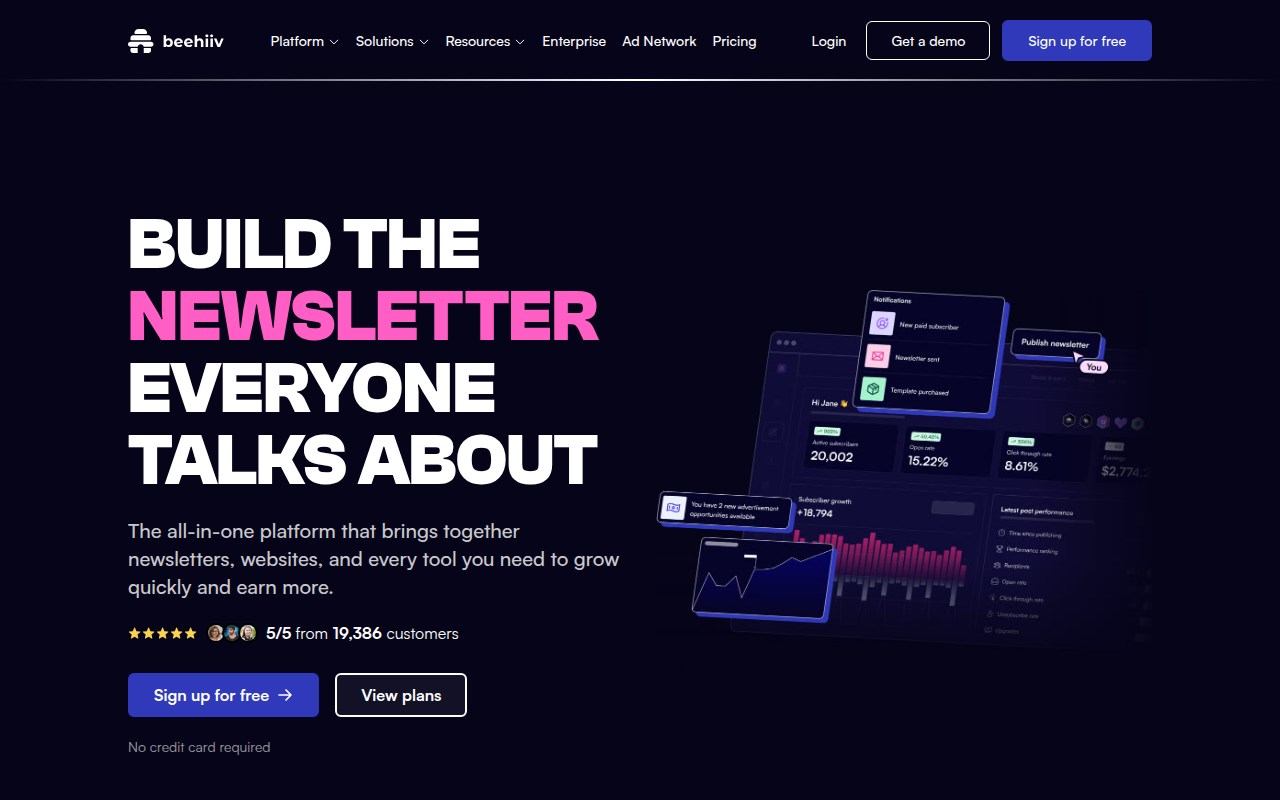
If you have been watching the newsletter space lately, you have likely heard of beehiiv. It was built by the same team that scaled Morning Brew to millions of subscribers, and you can tell. The platform is specifically engineered to bridge the awkward gap between simple writing tools like Substack and heavy enterprise marketing suites like Mailchimp or HubSpot.
The core philosophy here is "newsletter as a product." beehiiv is not just for sending emails. It creates a dual-channel content stream where every newsletter you send is automatically published to a high-performance, SEO-optimized website. This gives you a blog and an email list simultaneously without managing a separate WordPress instance.
It is designed for professional creators, media companies, and marketers who are tired of hacking together five different tools (referral software, analytics, email, website) just to run a newsletter. If you want to build a business rather than just a hobby blog, this is currently the standard to beat.
Key Features
beehiiv separates itself from the pack by baking "growth" directly into the infrastructure. Here are the features that actually move the needle.
Native Growth Flywheels (Referrals & Boosts)
This is the main reason people migrate to beehiiv. Usually, running a referral program (like "Refer 5 friends, get a free sticker") requires expensive third-party tools like SparkLoop or viral-loops. beehiiv includes this natively in their paid plans.
They also have a feature called Boosts. This is a recommendation marketplace. You can set a budget to pay other newsletters to drive subscribers to you, or you can earn revenue by recommending other newsletters to your new signups. It turns the signup flow into a revenue stream immediately.
The Ad Network & Monetization
Monetization is often a pain point for creators who hate cold-pitching sponsors. beehiiv has an internal Ad Network that matches your newsletter with premium brands like HubSpot or Masterclass. They handle the sales, you just drop the ad block into your editor.
Crucially, beehiiv takes a 0% commission on your subscription revenue. If you launch a paid newsletter, you keep all the money (minus standard Stripe processing fees). You only pay beehiiv their monthly SaaS fee. Compare that to Substack’s 10% cut, and the math creates a compelling argument for high-earning writers to switch.
3D Analytics & Pixels
Most email tools tell you open rates and click rates. beehiiv goes deeper with attribution modeling. Their "3D Analytics" dashboard visualizes exactly where your subscribers are coming from—whether that is organic search, a specific Twitter thread, or a paid ad campaign. It helps you understand the lifetime value (LTV) of subscribers based on their acquisition source so you aren't burning cash on bad marketing channels.
The "Notion-Style" Editor
The writing interface is clean and block-based. If you have used Notion, you will feel right at home. It is minimal but powerful enough to handle embeds, polls, and paywalls without needing to touch HTML code.
Pricing
beehiiv operates on a flat SaaS model. They don't tax your success, but the monthly costs can jump as you unlock features.
- Launch Plan ($0/month): Surprisingly generous. It allows up to 2,500 subscribers and includes unlimited sends and web hosting. However, you miss out on the referral program and the ad network. It is great for getting started.
- Scale Plan ($39/mo billed yearly or $49/mo monthly): This is the sweet spot for serious creators. It covers up to 100,000 subscribers and unlocks the "Growth" suite (Referrals, Ad Network, AI tools, and 3D analytics).
- Max Plan ($99/mo billed yearly): This is for power users and agencies. It removes beehiiv branding, allows for multiple publications under one account, and gives you priority support.
Pros & Cons
No tool is perfect. Here is the honest breakdown of where beehiiv shines and where it struggles.
Pros
- Speed of Innovation: The dev team ships updates constantly. New features drop almost weekly.
- Cost Efficiency at Scale: Because they don't take a % of revenue, big newsletters save thousands of dollars compared to competitors.
- Built-in Growth: having the referral system and Boosts network integrated saves you from "tool fatigue" and extra subscription costs.
- Modern UX: It is simply easier to navigate and write in than legacy tools like ActiveCampaign or AWeber.
Cons
- The Price Jump: Going from Free to $49/month is a steep cliff for hobbyists who haven't made their first dollar yet.
- Design Limitations: While the websites are clean and fast, you don't have the design freedom of WordPress or Webflow. You are playing in their sandbox visually.
- Automation Curve: The automation builder is powerful, but if you are coming from a simple tool, the learning curve can be a bit tricky.
- Integrations: It is a newer platform, so it has fewer native integrations than Mailchimp. You will likely rely on Zapier to connect it to other specific tools in your stack.
Verdict
beehiiv is currently the best platform for anyone treating their newsletter as a business rather than a diary.
If you just want to write a personal journal for 50 people, stick with the free version of Substack or a personal blog. But if you are a growth-focused marketer, a media company, or a creator looking to own your audience and revenue without giving up a percentage of your income, beehiiv is the correct choice.
The combination of the referral program, the ad network, and the SEO-friendly website capabilities makes it a singular solution for the modern newsletter operator. Start with the free Launch plan, but be prepared to upgrade to the Scale plan once you hit growth mode to access the features that make the platform truly worth it.